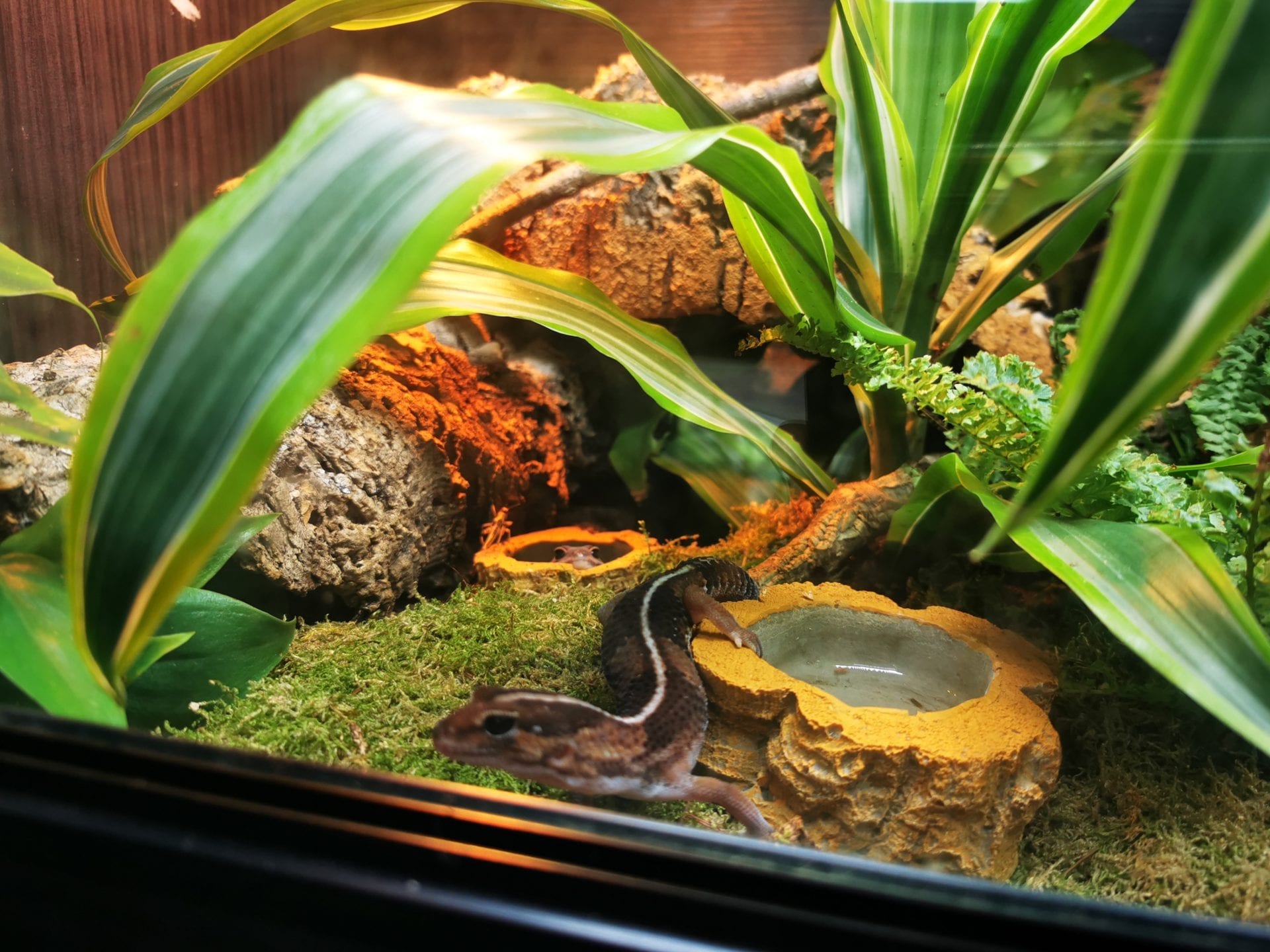
Bioactive Setups
In its basic form, a Bioactive setup is any type of enclosure that employs one or more species of Invertebrate to clean up waste products. Of course, there is much more to setting up a Bioactive enclosure than throwing a few bugs in to your normal, sterile type setup. This article hopes to explain the process, in as simple terms as possible, to be the basis of ones understanding. From this, they will expand further as they research the method.
Before we get down to it, though, I would like to clear up a common misconception that seems to be spreading throughout the community.
There is no such thing as a ‘part bioactive setup’.
I understand what people are attempting to say when they use this term, but understanding why it is not a valid term should help to understand the rest of the setup, and remove some fears about.
As discussed, bioactive setups are any where one or more species clean the environment. So adding a handful of Springtails to an enclosure makes it Bioactive. Not well established, of course, but there will still be an element of cleaning, even if you still spot clean daily. Having no Inverts at all, but lovely live plants is not bioactive; this is a Live Planted, or even Naturalistic. More on the terms used can are here; https://bh.crypticwebhost.co.uk/enclosure-types/
Semantics out of the way let’s get down to business.
Planting
You may, or may not, be using live plants, so I will cover them here just in case. Picking the plants you will choose is a very personal journey, based on what strikes you as looking nice, whilst also being suitable for the enclosure. You should also bear in mind whether the inhabitant is likely to eat the plant at all, as some plants can be toxic if too many get ingested.
When planting, the best tip I can give (based on personal experience/failure) is to ensure that you get your substrate mix pressed in as close to the roots as possible, to ensure water filters through to the plant, rather than meeting a gap barrier and dropping straight down to the drainage layer.
To do this, create a hole in the substrate where you would like the plant to go. Before taking the plant out of the pot, put it in the hole and decide if that is definitely the place you want it.
If it is, soak the soil in the plant pot. Really saturate it. Now tip the pot and tap the bottom to release the plant. You will find that the soil will start to break away, opening up the roots of the plant. Place this, soil and all, into the hole you dug and refill the hole with your substrate. Firmly press the soil in around the roots.
Once you have finished with your plants, stand back and admire your work
When buying plants, be cautious of using Garden Centre plants that are often treated with fertilisers and pesticides. It is advisable to repot these plants and grow on a windowsill for a few weeks, to remove any trace of these Chemicals. Otherwise, buy from a Reptile Specialist pet shop, where they should have ensured this process has occurred before they get to you.
Custodians
Finally, the Coup de grâce, adding your cleaners!
Let us start by going over some of the choices available to the bioactive scene, and their pros and cons.
Springtails
These little bugs are the backbone of any bioactive setup. Their key is sheer numbers. Springtails breed well and can colonise an enclosure fast. They prefer setups that have areas of high moisture, and thrive in tropical setups. Yet, they can get used in dryer setups by utilising leaf litter, logs, water bowls and other items to create damp, hidden areas. There are no cons to these amazing little hexapods, unless you don’t like tiny white jumping bugs in your setup I guess.
Temperate Woodlice
These often come under the name of European Woodlice and actually consist of many different species. The most common of which come from the families Armadillidium and Oniscus. Armadillidium are often referred to as ‘Polys’ or ‘Pill bugs’ due to their defense mechanism of rolling into tight balls. Oniscus woodlice do not have this ability. Instead, they get identified by a large, pale skirt around the entire outside of their bodies. Temperate Woodlice are much more tolerant of dryer conditions than their tropical counterparts, and so perfect as an addition to Bearded Dragon setups. They will thrive in tropical setups too. Temperate woodlice are also much bigger than Tropicals, with some species attaining almost an inch in length. As with all Woodlice, their exo skeleton is a brilliant source of calcium, so they also make great feeders.
Tropical Dwarf White Woodlice
As the name hints, Tropical Dwarf White Woodlice are small, approximately 5mm or so, white and love Tropical setups. They are actually a species from Brazil called Trichronorina tomentosa, and God only knows who the first person to think they’d be a great addition to Herpetology was! These guys won’t do as well in dryer setups, tending to die off much easier than the Temperates, but given time, they will explode in any warm, humid setup and perform very well, attacking waste organic matter and burying it below the soil.
Another wonderful Tropical species, these are the ideal intermediate between Temperate Woodlice and Tropical Dwarf Whites. They reach sizes of around 1 to 1.5cm long, have glossy grey, or sometimes orange, bodies and never stop moving. These are also more tolerant of dryer enclosure, provided they get given warm, moist refuges to hide in.
Mealworm/Darkling Beetles
The standard Mealworm is not only useful as a feeder, but now works well as a cleaner bug too. Both the Adult Beetle and the Juvenile Larvae will consume any organic (and even inorganic – http://www.iflscience.com/environment/plastic-eating-mealworms-could-help-reduce-landfill-waste) material in the enclosure. They also thrive under the high heat of Arid setups, making them ideal as a diurnal cleaner to work alongside woodlice and springtails. Whilst they can survive in some Tropical setups, if it is too wet, they won’t last long.
Earthworms
Whether it’s the smaller Dendrobaena worm or the much larger Lob Worm, Earthworms are a must for any Live planted setup. They drag waste organic matter down below the ground for bugs, Fungi and Bacteria to work on, and their movement encourages aeration of the soil, which improves water drainage. Their castings also serve as nutritious pellets for plants to absorb vital nutrients for growth. Even the smallest tank should have a population of Earthworms.
The list of Custodians is far from exhaustive, with new and interesting options get thought of almost daily. I also include Dubia Roaches, Suriname Roaches, Beetle Grubs and more into my setups, as they can all serve a purpose, even if it is just turning the soil over through movement.
When adding your bugs, try to spread them across the entire enclosure to ensure they aren’t hiding close to where you left them in one end. Also, give them some time to find their way to hiding spots before adding the intended inhabitant. This will prevent a full on gorge fest, leaving you with very few cleaners.
Maintaining your new Bioactive Enclosure
The main draw of a Bioactive setup is that they are a self maintaining eco system. You don’t need to clean or interfere much, meaning less stress on the animals, and more time for you to enjoy them without them becoming a chore.
But, it is not as simple as throwing bugs into the enclosure and hoping they keep it clean. It can take a few weeks, up to a few months depending on the enclosure size and environment, to have a self maintaining system.
During the first few weeks, remove waste as you see it. Don’t worry too much if some gets left behind, pull out the bulk of the waste. It can also be beneficial to use some form of extra diet to help numbers grow and sustain. Tried and Tested methods include Fish Food, Mushroom, Brewers Yeast, Spirulina or any other waste organic matter. There are also a few pre made Custodian diets available now, which save time and effort getting food in, and store for long periods of time.
You will begin to notice that each bit of waste gets covered in Springtails and woodlice before you can go to pick it out. This is a good sign your system is establishing well.
Other good signs include;
Strong Plant Growth – Plants can thrive in a Bioactive System, as waste gets broken down into nutrients for them to absorb.
Mushroom Growth – You may notice Mushroom and other fungi developing. 99% of the time, these are harmless white mushrooms. This is another part of the Nitrogen Cycle that is occurring in your enclosure, showing that beneficial bacteria are at levels where the Ammonia is being broken down in to Nitrogen based compounds.
If you have any concerns about the Mushrooms, just pull them out, but they will disappear over time as the system settles. They’re also a great booster for springtails once the head has begun to wilt.
Conclusion
There is no single method to creating a Bioactive Setup. Experiment and throw ideas around to see what works for you, your cleaners and your animal. Join forums and Facebook groups, like Bioactive Vivaria Worldwide, to see what other people do, and to discuss your own methods and watch the community evolve as we learn more about the natural habits and behaviours of animals free to hunt, move, bask and act more naturally than they could before. And have fun with it, Reptile Keeping shouldn’t be a chore, it’s an opportunity to connect with nature in the home, in a way we never could in the wild.
© Tarron Boon and Bioactive Herps, 2016, Image © Tarron Boon, 2019.


Leave a Reply
You must be logged in to post a comment.