Description
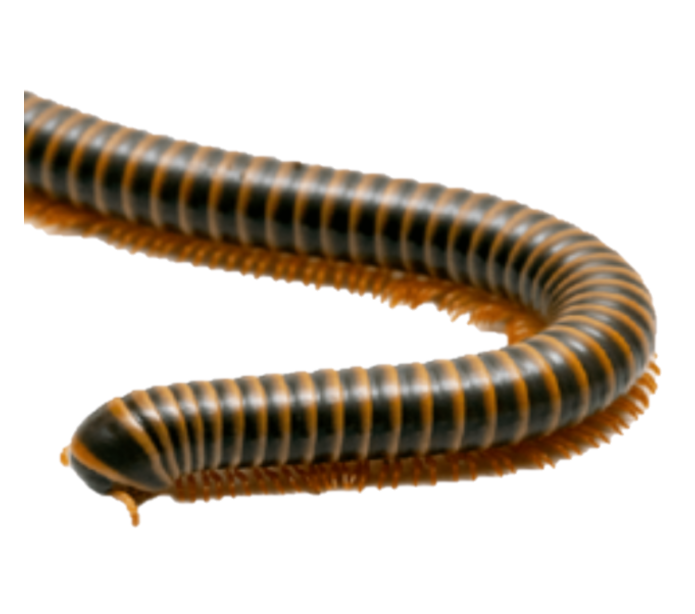
Benoitolus siamensis is a small, slender species. It has a dark gray ground color, with the edges of the head shield, the posterior section of the double segments and the anal segment being narrowly pale yellowish. The antennae and legs of Benoitolus siamensis are also pale yellow.
Due to the relatively small adult size and their urge to climb, a terrarium measuring 20 x 20 x 30 cm is suitable. However, care should be taken to ensure that there is enough space for a sufficiently high filled substrate. The substrate height for this species should not be less than 6 cm! The substrate serves as a habitat and food for the animals at the same time and is also used by this species from time to time to molt. However, Benoitolus siamensis often simply sheds its skin on the surface.
Daily temperatures of 25-28 °C have proven themselves when keeping this species. The animals are diurnal and therefore very interesting for anyone who likes to watch their animals. When reaching the temperatures in the terrarium, it is important to always attach the heat source from above and never from below! The substrate should always be kept semi-moist. An air humidity of 70-85% is most likely to correspond to the conditions of their natural habitat. The substrate can also be covered with leaves, pieces of bark or moss. This will help keep it from drying out.
Benoitolus siamensis can always be found near the beach in Thailand. There they live on trees and like to hang out on branch forks that are filled with humus and leaves. This is also where they prefer to lay their eggs and the offspring spends the first time at this location. You can simulate such places in the terrarium and observe whether the animals accept them.
This species is also suitable for beginners, as it is very active and survives longer dry periods unscathed. A community tank with Benoitolus siamensis and the Cubaris species, which also come from Thailand, is a good idea.
Essential Husbandry info:
Temperature: 25 to 28c
Climate: Tropical
Diet: Rotting leaves, rotting wood, lichens
Breeding: Easy
Overall Diffiuclty: Easy


Reviews
There are no reviews yet.